Fix missing Asterisk library error (libasteriskssl.so.1 & libasteriskpj.so.2 not found)


Fix missing Asterisk library error (libasteriskssl.so.1 & libasteriskpj.so.2 not found)


Here we will discuss how to solve a problem with the libasteriskssl and libasteriskpj libraries that may appear during installation on Debian or other systems.


1) Symptoms of the problem

        After compiling Asterisk using the ./configure command with the --libdir=/usr/lib64 parameter, we will encounter problems with starting the Asterisk system at the end of the installation. The system will not be able to find the necessary libraries. This may result in a message similar to the following: error while loading shared libraries: libasteriskssl.so.1: cannot open shared object file: No such file or directory
ldd /usr/sbin/asterisk
You can see that the operating system cannot find two libraries; libasteriskssl and libasteriskpj. Errors appear: libasteriskssl.so.1 => not found libasteriskpj.so.2 => not found

2) Solution to the problem


        As you can see, the system is trying to find the libraries in the /lib/x86_64-linux-gnu directory. We need to look for where they are actually located.
find / -name 'libasteriskssl.so.1'
As we could guess, the compiler copied them from the source to the place we indicated, i.e. /usr/lib64 We now need to put them in the right place, i.e. in /lib/x86_64-linux-gnu We will use the ln command to create appropriate symbolic links to these necessary libraries.
ln -s /usr/lib64/libasteriskssl.so.1 /lib/x86_64-linux-gnu
ln -s /usr/lib64/libasteriskpj.so.2 /lib/x86_64-linux-gnu
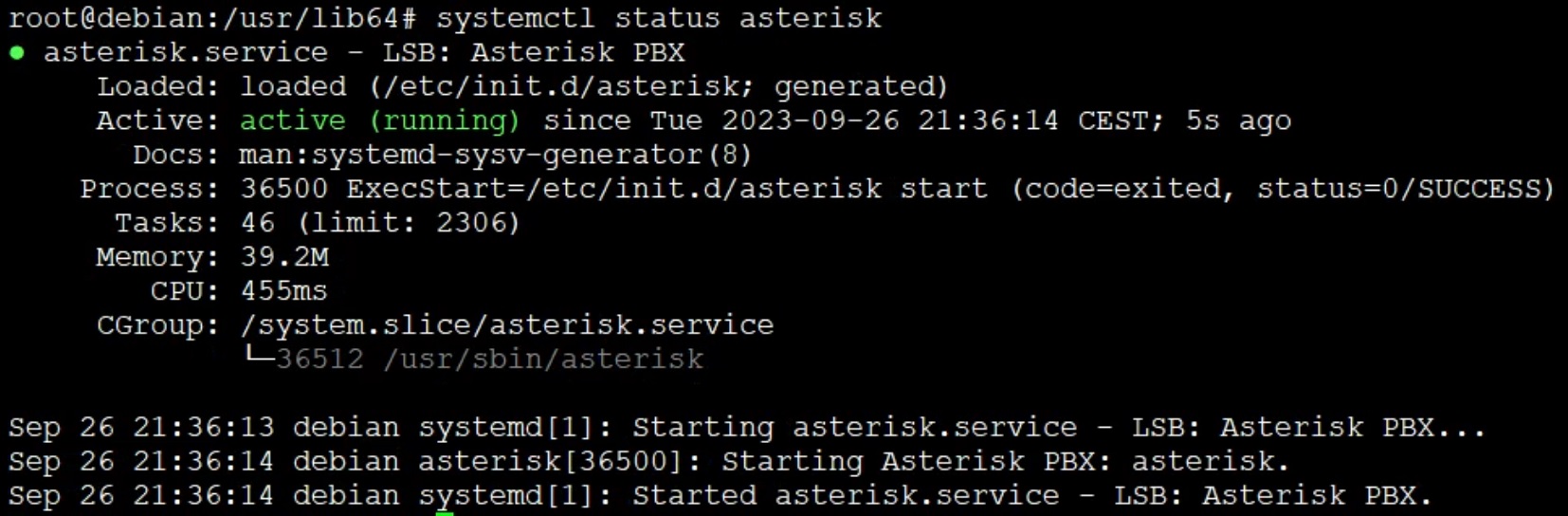
Now we can run Asterisk without any problems and check its status.
systemctl start asterisk
systemctl status asterisk
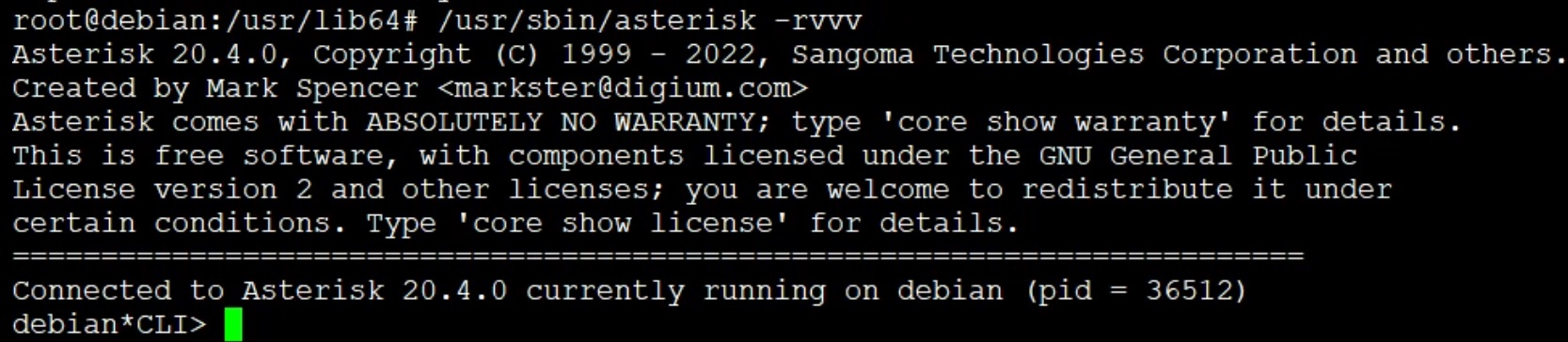
After switching to the asterisk console, we can monitor the operation of the system.
/usr/sbin/asterisk -rvvv
Problem solved!      


Comments

Popular posts from this blog

Vicidial Scratch installation Alma -9

Step 1 – Download the dependencies   hostnamectl set-hostname xxxxxx.xxxxx.xxx ### Use YOUR SubDomain vi /etc/hosts ##Change domain name for actual server ip (xxx.xxx.xxx.xxx   complete domain name    subdomain only) timedatectl set-timezone Asia/Kolkata yum check-update yum update -y yum -y install epel-release yum update -y yum install git -y yum install -y kernel* sudo dnf install kernel-devel-$(uname -r) -y #Disable SELINUX sed -i 's/SELINUX=enforcing/SELINUX=disabled/g' /etc/selinux/config     reboot Step 2 – Run the Script cd /usr/src/ git clone https://github.com/manish23k/vicidial-install-scripts cd vicidial-install-scripts ####For PHP 7.4 use this script. chmod +x alma-rocky9-ast16.sh ./alma-rocky9-ast16.sh Or the Asterisk 18 version: chmod +x alma-rocky9-ast18.sh ./alma-rocky9-ast18.sh ####For PHP 8 use this script. chmod +x main-installer-php8.sh ./main-installer-php8.sh

Alma 9 Vicidial Selfsign Webrtc

I am going to provide step by step guide to integrate, enable and configure the viciphone(a webrtc phone) in vicidial (also applicable to any vicidial based system) using the Self Signed SSL Certificate ,ie without a public-ip and FQDN or accessing the vicidial with internal LAN IP. 1️⃣ Install OpenSSL (if not installed) sudo dnf install -y openssl 2️⃣ Generate a Private Key openssl genpkey -algorithm RSA -out selfsigned.key -pkeyopt rsa_keygen_bits:2048 3️⃣ Create a Certificate Signing Request (CSR) openssl req -new -key selfsigned.key -out selfsigned.csr It will prompt you for details like: Country Name (e.g., IN ) State or Province (e.g., Gujarat ) Locality (City) Organization Name Common Name (Domain, e.g., example.com or your server IP) Email Address You can use localhost or an IP address if needed. 4️⃣ Generate a Self-Signed Certificate openssl x509 -req -days 365 -in selfsigned.csr -signkey selfsigned.key -out selfsigned.crt -days 365 → Valid for 1 year (Adjust as needed) ...

Install OpenVPN on AlmaLinux 9.5

 To install OpenVPN on AlmaLinux 9.5, you can follow these steps: 1. Update the System : Before installing any software, it's a good idea to update your system: sudo dnf update -y 2. Install EPEL Repository : OpenVPN is available in the EPEL (Extra Packages for Enterprise Linux) repository. First, install the EPEL repository: sudo dnf install epel-release -y 3. Install OpenVPN : After enabling the EPEL repository, install OpenVPN: sudo dnf install openvpn -y 4. Install NetworkManager (Optional) : If you are using NetworkManager for managing network connections, you can install the OpenVPN plugin for NetworkManager: sudo dnf install NetworkManager-openvpn -y 5. Configure OpenVPN : Once installed, you need to configure OpenVPN by copying your .ovpn configuration file to the /etc/openvpn/ directory: sudo cp /path/to/your/config.ovpn /etc/openvpn/ 6. Start OpenVPN : You can start OpenVPN by specifying the configuration file directly: sudo openvpn --config /etc...